
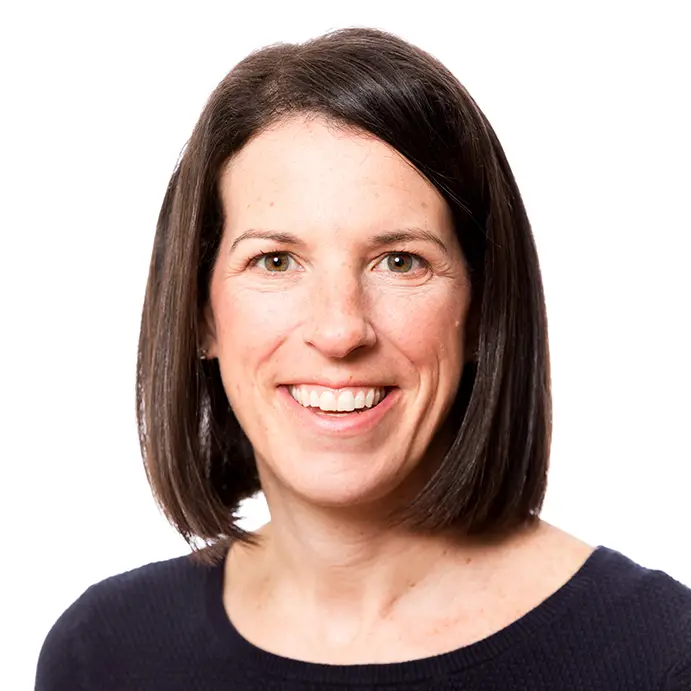
Tell us a little bit more about your role.
I oversee a team of 11 market researchers, half based in the U.S. and half in India. We provide quantitative research for three product lines. Our Indices products are the Oncology Index and the Biologics and Injectables Index, which are syndicated reports produced for our subscribers, along with monthly Market Event Primers that we use to solicit immediate feedback on a recent policy change or market-disrupting event. We also work on Patient and Staff Satisfaction Surveys. We work with MMIT’s Advisory team and others to determine which topics will be of most interest to our clients.
For our Rapid Response and Engage products, we work directly with the clients to write and launch customized surveys. With Rapid Response, we promise delivery of the survey results within 10 business days of the client finalizing the survey, which is honestly unheard of in the industry—there aren’t any other companies that I know of that can deliver custom research that quickly.
The beautiful thing about half of our team being located in India is that this allows us to operate around the clock. When a survey comes in, we can ask our India team to program it during their workday, which is overnight in the U.S. By the next morning, we’re able to launch it. There’s never a lag in our process. When it comes out of the field, the team in India team is able to immediately start populating the report.
How did you join the company? What in your background brought you to pharma?
I have a master’s in marketing with a focus in market research. After beginning my career in a traditional market research agency, I spent a few years in the marketing department of an academic medical center, supporting our product line research. If our orthopedics department wanted to know how knee replacement patients ended up at our center, for example, I’d do a patient study on the care journey.
In addition to HCP research and patient research, I also contributed to our overall brand research, which was important at the time because we were acquiring and integrating with two health systems. After that, I worked at a media company providing market research and data to our sales team to help them sell to healthcare clients.
I really wanted to get back into primary research, so when this opportunity opened up at MMIT a few years ago, it seemed like a natural fit. I’ve come full circle through the patient journey!
What does your day-to-day usually look like?
Every single day is different, which I love! Sometimes we’re working on ten different Rapid Response surveys at the same time, in ten different therapeutic areas, at various stages of research. It’s particularly difficult to predict when Rapid Response requests are going to come in. Just yesterday, we were finishing up a couple of Rapid Response reports and then three more requests popped up, all with tight deadlines.
The Rapid Responses can be about any topic, from a client trying to determine how payers are likely to cover their new drug to a client trying to figure out the best price range for their product that is about to launch. We just recently did one on message testing, and now we’re doing one that tests the various value propositions, to help the client know what payers are most interested in.
In addition to the Rapid Responses, we might sometimes be juggling three different Indices topics and a Market Event Primer while we’re also working on Patient and Staff Satisfaction Surveys. I also spend time doing training, helping new analysts learn our methodology and working with them to refine the way they write survey questions. Market research is a science, but also an art, and I love strengthening our team’s skills.
What are some of the larger projects you’re working on?
We’re working on a project right now that uses a new survey tool. We recently delivered Index reports on mental health and clinical treatment pathways. And we just had a pharmaceutical company purchase our Patient and Office Staff Satisfaction Surveys, which is nice to see. Usually, that product is purchased by specialty pharmacies, but the business case for tracking these survey results is expanding into pharmaceutical companies.
What are some of the common challenges of your role?
Juggling all the moving parts of Rapid Response research can be tricky, as we always have more than one going on at a time. As those projects have especially short turnaround times, we’re always under pressure to get everything completed before the deadline. Luckily, we have a great team of knowledgeable researchers who are all well-versed in lots of different therapeutic areas. Our collaboration with the Advisory team is so helpful in this regard, because we can check in with them when we’re building surveys to make sure we’ve captured everything as effectively as possible.
What’s been your career highlight to date?
I can give you three! First of all, I love making clients happy. A few weeks ago, the client was gushing about how high-quality our research is, and how valuable the results were for them. They could not believe they received the results in such a short timeframe.
And today, I had another client who was just thrilled with the results of a Rapid Response survey we delivered for them. The client had a hypothesis that their lack of contracting was contributing to lower prescription numbers, and our research validated that hypothesis: it assured them that contracting would help them improve uptake. In the end, what we’re doing is fueling our mission, which is making sure that drugs become more accessible to patients.
Another career highlight was when one of our Market Event Primers ended up quoted in the Economist. That was really cool. And finally, I participated in the Hackathon this year, which was an unusual experience for me that really pushed my boundaries. As a market researcher, I always thought of the Hackathon as unattainable for me; I’m not a programmer! But it was actually a really rewarding experience. We worked on a product that used AI to help our team conduct quality control checks and develop insights more efficiently. It was incredible to see a prototype of this tool in just a couple of days, and to realize that if we really developed it, it would prove very valuable to our team.
What trends are you seeing across the industry right now that MMIT is in a unique position to help with?
So much is changing in healthcare right now. Our proprietary panel really helps our clients stay on top of trending events. The people on our panel are current P&T decision-makers or influencers; they’re not consultants, and they’re not retirees. So when we do our research for a client, we’re able to give them actual insights from current payers, and we do that incredibly quickly. In this changing world where things are so uncertain, it’s pretty remarkable that we can provide clients with the pulse on a situation without them having to wait.
Which company principle resonates most with you?
Integrity, truth, and reality means the most to me. This principle is all about pushing yourself to achieve ambitious goals, while providing realistic and honest insights. I really feel like that embodies what we do. We are always pushing the boundaries, whether that’s working to deliver insights in less than 10 days or deciding which trending topics to cover for our Market Event Primers.
We are always striving to make our reports more useful for our clients. For example, when I started at MMIT, we only delivered Rapid Response results in terms of the percentage of payers who answered a question. But then we realized that understanding the percentage of covered lives would be much more useful for clients, so now we will write, “56% of responding payers, representing 78% of covered commercial lives, stated XYZ.” We never stop trying to give clients realistic, honest insights that can help them navigate the market.
What would you tell someone just starting their career with MMIT?
MMIT is an amazing company that provides employees with so many opportunities for growth! I love to see my team grow new skills. It’s very rewarding to work here because there are so many chances to step outside of your comfort zone and gain more knowledge—like working on thought leadership blogs, or participating in the Hackathon. So many people go beyond their stated role and really collaborate with other teams to accomplish new things.
What do you like most about working at MMIT?
I love the cross-team collaboration. I work with people inside my team to build surveys, but we also work with the Advisory team and the Panel team. I love seeing all of our different skill sets come together to add value for the clients. We even collaborate with the clients to figure out exactly what they’re looking for!
What do you like to do outside of work?
My husband and I have a teenager and an almost-teenager, so they keep us extremely busy! I spend my weekends driving to and watching lots of kids’ sporting events. We also love to travel as a family.
