Biologics & Injectables Index

Convert Unblinded Payer Perceptions into Insights

Track Biologics and Injectables Trends with Confidence

What Our Clients Are Saying

How We Can Help

Harness the power of MMIT’s Biologics & Injectables Index, built on robust field research with an industry-leading panel of pharmacy decision-makers. 100% of panellists are either active P&T participants or control access for pharmaceuticals for their organizations, delivering unparalleled market access visibility and actionable payer perspectives to inform your team’s strategic choices.

How can the Biologics & Injectables Index help my team understand payer perspectives and decision‑making?

The Biologics & Injectables Index helps your team understand payer perspectives and decision‑making by capturing unblinded insights from active P&T participants and access controllers across plans, PBMs, providers, and IDNs, revealing how they evaluate biologic and injectable therapies.

The Biologics & Injectables Index identifies trends in coverage, site‑of‑care dynamics, and emerging therapies by tracking quarterly payer reactions, access management topics, and therapeutic‑area shifts that highlight evolving market dynamics.

How can the Biologics & Injectables Index help inform market access and commercial strategy?

The Biologics & Injectables Index informs market access and commercial strategy by providing forward‑looking payer, HCP, and practice‑manager insights that clarify anticipated coverage changes, administration burdens, and competitive pressures across Commercial and Medicare lines of business.

Key Insights From MMIT

The New Economics of Gene Therapy

Cell and gene therapies are no longer reserved only for ultra-rare diseases. In many therapeutic areas (TAs), advances in viral vector delivery, gene editing technologies, and cell-based medicine are enabling interventions that target disease at its biological source, often through a single administration rather than lifelong treatment.

These developments should be unequivocally positive for patients. However, as gene therapies transition from scientific breakthrough to commercial reality, a more complex picture of access is emerging. Insurance companies that were built to fund chronic, recurring treatments are now being asked to absorb high-cost, one-time therapies with benefits that unfold over years.

The Payer Dilemma: Upfront Costs, Long-Term Value 

At the heart of gene therapy adoption lies a structural challenge. Although these therapies are typically delivered just once, their value is realized over a long period of time. Despite their efficacy, many gene therapies are priced between $2 million and $4 million per patient, creating immediate budget pressure for payers. Given the longstanding issue of member churn in the U.S. market, patients may well change insurers before the payer can recognize long-term value.

Payers are also concerned about the durability of these treatments, as long-term outcomes are not fully established at launch. This combination of upfront cost, uncertain durability, and immediate budgetary impact creates a mismatch that traditional reimbursement models were not designed to handle. As gene therapies do not fit neatly into existing access frameworks, payer reactions vary significantly depending on where and how these therapies are being introduced.

This uncertainty is reflected in payer sentiment. According to recent MMIT Indices research, most payers—representing 69% of commercial lives and 92% of Medicare lives—report only moderate satisfaction with currently available gene therapies (3.2 out of 5). At the same time, most payers (representing 55% of commercial lives; 72% of Medicare lives) report a high level of unmet need (3.8 out of 5) in these disease areas, highlighting the gap between the clinical promise of gene therapy and confidence in its long-term value proposition.

Gene Therapy’s Expansion into New Therapeutic Areas 

The gene therapy pipeline continues to expand well beyond its origins in ultra-rare disease. Today, there are more than 4,200 gene and cell therapy programs in development, with increasing focus on non-oncology TAs.

This evolution reflects a broader shift from niche, high-cost treatments affecting a few patients to therapies intended for larger patient populations—with potentially system-wide financial implications. Even among currently approved treatments, the diversity of indications—from hemophilia and spinal muscular atrophy (SMA) to diabetes and sickle cell disease—signals how rapidly the field is evolving.

The Durability Question in Hemophilia Gene Therapy 

In rare diseases like hemophilia, there is no doubt that gene therapy represents a significant leap forward. However, patients with hemophilia already have access to highly effective treatments, including both factor replacement and non-factor therapies that significantly reduce disease burden but require lifelong administration.

In addition to the issue of cost-efficacy, this creates a fundamentally different payer question about whether gene therapy can realistically replace chronic care. Patients’ durability of response therefore becomes the defining issue. While early results show sustained factor expression, long-term outcomes for patients treated with hemophilia CGTs remain uncertain, as some decline in effect over time has been observed. 

In hemophilia, multiple gene therapies targeting similar mechanisms have entered the market with limited comparative data. For payers, this introduces a new challenge: comparing competing “functional cures” without clear long-term differentiation.

Faced with limited utilization, however, several manufacturers have reconsidered their hemophilia gene therapy pipelines and portfolios over the past year. These adjustments include the discontinuation of development, such as Roche’s decision to halt the development of an experimental gene therapy; the cessation of commercialization efforts for FDA-approved therapies, exemplified by Pfizer’s withdrawal of Beqvez; and the termination of strategic partnerships that may impact the progress of promising treatments, as seen in the dissolution of the Pfizer/Sangamo collaboration. 

Convenience as a Differentiator in Next-Generation Gene Editing for HAE

In another TA, insights from MMIT’s Message Monitor reveal that not all gene therapies differentiate on efficacy alone. In hereditary angioedema (HAE), a rare genetic disorder, Intelligia Therapeutics is developing an in vivo CRISPR-based gene editing therapy, lonvo-z, which would enable a one-time outpatient administration without the need for extensive preconditioning. Early clinical data demonstrate meaningful reductions in attack frequency, with Phase 2 results showing approximately an 80% decrease in monthly HAE attacks.

However, payer feedback suggests that clinical effectiveness alone may not be the primary driver of adoption in this space. While existing therapies already achieve strong disease control, the key differentiator for gene editing approaches may be convenience, including reduced treatment burden and simplified administration. This introduces a different access dynamic: rather than displacing ineffective care, these therapies must compete against already effective options by offering a superior patient experience.

Access Lessons Learned from Oncology and CAR-T Therapies 

In oncology, the story is different. CAR-T therapies have introduced a model that is not only high-cost but also operationally complex. These therapies are patient-specific, delivered in specialized hospital settings and targeted to patients with advanced or refractory disease. Payers have adapted to this complexity relatively quickly, and structured reimbursement pathways, Centers of Excellence, and outcomes-based contracts are now standard components of CAR-T access models.

Importantly, CAR-T is no longer confined to very small populations. In diseases like multiple myeloma, its use is expanding into earlier lines of treatment, increasing the number of eligible patients and raising new concerns around affordability. As a result, oncology has effectively become the testing ground for new gene therapy reimbursement models.

Expanding Access Beyond Specialty Populations 

The next wave of gene therapy is moving into TAs with far larger patient populations, including neurology, ophthalmology, and cardiovascular disease. As gene therapy moves into these areas, payers are becoming more concerned about the feasibility of paying for these therapies at scale.

This shift introduces a different type of challenge for payers, as they must contend with more eligible patients, more frequent use, and a greater cumulative budget impact. For example, neurology pipelines in Parkinson’s and ALS are expanding rapidly, and ophthalmology indications such as AMD affect millions of patients. New cardiovascular targets like PCSK9 could apply to broad populations. 

Finding Reimbursement Pathways to Support Sustainable Adoption 

Rather than limiting access to gene therapies outright, payers are evolving their approaches to manage these risks, beginning with stricter evidence-based utilization management.

Genetic testing is increasingly used as a gatekeeper. While most payers (representing 76% of commercial and 78% of Medicare lives) cover FDA-approved genetic tests and companion diagnostics under their most representative plan, they typically require prior authorization for genetic testing and companion diagnostics. There is also quite a bit of coverage variability for advancements like liquid NGS biomarker testing.

At the same time, contracting models are evolving. Payers are increasingly exploring outcomes-based agreements, value-based pricing models and installment or annuity payments. Perhaps most notably, warranty-based models are gaining attention. In these agreements, manufacturers take on part of the durability risk offering rebates or adjustments if outcomes fall short. Payers are also turning to financial mechanisms like reinsurance and stop-loss coverage to help manage concentrated cost exposure.

As cell and gene therapies scale, the focus will shift from individual access decisions to system-wide sustainability—for both payers and manufacturers. From a pharma perspective, the recent trend of market withdrawals and the strategic reprioritization of several gene therapy programs has highlighted the challenges associated with commercialization, evidence generation, and long-term sustainability. The future of gene therapy may depend as much on innovation in payment models as innovation in biotechnology.

For insights into payer management trends for specific TAs, learn more about MMIT’s Oncology Index and Biologics & Injectables Index. Visit our Message Monitor page for information on tracking payer brand perception, and our Custom Market Research page for tailored insights aligned to your specific business challenges.

ACCESS THE RESOURCE

From Prior Authorization to Clinical Pathways: The Growing Role of AI in Payer Strategy

There is no doubt that payers in the U.S. are investing heavily in AI, but there is much uncertainty about how this technology is currently deployed. While the industry’s AI conversation has focused on generative tools and administrative efficiency, payers are increasingly deploying AI in utilization management, clinical pathways and contracting. According to research from MMIT’s Indices team, nearly half of payers are planning the implementation of at least one additional AI solution in the next 12–18 months.

Although AI-driven changes remain largely invisible to physicians and patients, AI is already beginning to shape how therapies are evaluated, approved and managed. It’s critical for manufacturers to understand the disconnect between payers’ current usage of AI and provider awareness, especially as AI becomes more integrated into payer processes.

As payers use AI to accelerate prior authorization (PA) reviews, optimize treatment pathways and evaluate performance-based agreements, manufacturers will need to rethink how they demonstrate value, support providers, and prepare for increasingly dynamic access controls.

Payers’ Use of AI Remains Largely Invisible to Providers

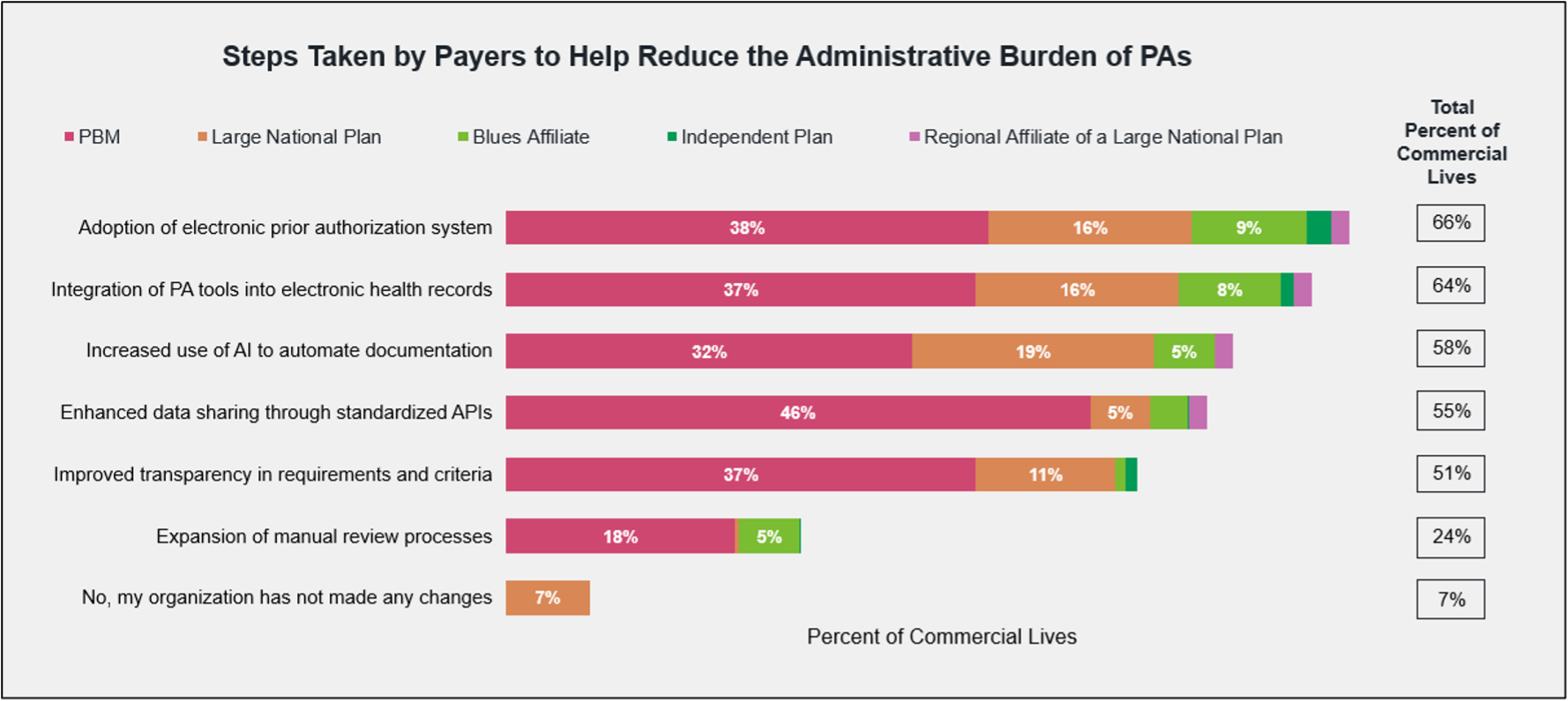
In recent years, payers have taken a variety of steps to help reduce the administrative burden of PAs on providers. The most common steps are adopting electronic PA systems, integrating PA tools in EHR systems, and using AI to automate documentation.

Most providers remain unaware of payers’ use of AI, in large part due to a lack of visible workflow changes. Practice managers, especially those in oncology, are the most likely to have noticed the use of electronic PA systems and EHR integration. However, more than half of surveyed physicians say their practice hasn’t noticed any changes to the PA process at all.
growing-role-ai-payer-strategy

In a more recent survey of payers covering 169.2 commercial and Medicare lives, MMIT researchers found that payers representing 45% of commercial lives are already using AI to automate and streamline parts of the PA process.

Despite this, roughly three-quarters of surveyed physicians, oncologists, and practice managers report that AI has not yet been applied to the PA process. Clearly, manufacturers cannot rely on provider perception to assess the sophistication of payer tools.

How AI Is Starting to Shape Utilization Management

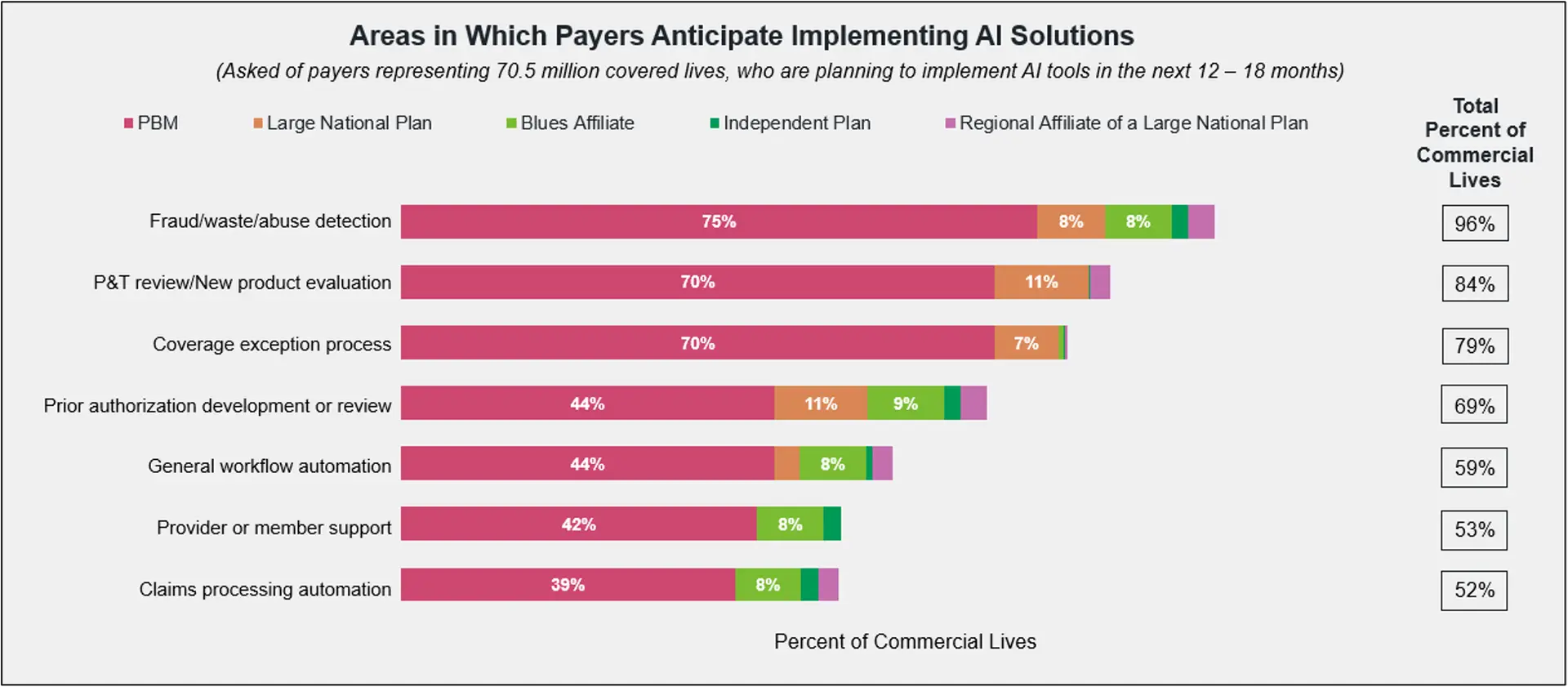
So how are payers using AI thus far? Payers’ most mature AI applications typically include workflow automation and provider/member support, with fewer payers using AI for claims processing automation, coverage exception processing, and early PA automation and review.

Our research indicates that overall, payers are predominantly using AI to standardize, accelerate, and triage decisions—not to replace clinical judgment. This holds true for the PA process as well, at least for now.

Payers report using AI to reduce the administrative workload associated with PAs, most notably by aiding with auto-approvals, clinical rule application, and automated data review. Use cases range from more administrative applications like “reviewing fill history for step therapies” and “reading faxes and incoming data to feed into decision trees” to more sophisticated applications, such as the real-time review of clinical criteria.

As one payer notes, “AI is reducing the burden through automated clinical decision support using natural language processing to help extract criteria details from submissions . . . [and through] provider decision support, which gives real-time guidance at the point of prescribing.”

Most payers are actively preparing for broader AI integration within the next year. Among payers that had not yet implemented AI by the close of 2025, fraud/waste/abuse detection, P&T review and PA review were among the top areas for future adoption, indicating a shift toward risk management and clinical evaluation.
growing-role-ai-payer-strategy

The Next Wave: AI in Clinical Pathways and Contracting Optimization

Payers representing 19% of covered lives already use AI-powered tools to help develop clinical treatment pathways, while payers representing an additional 63% of covered lives are planning for this capability in the future. Similarly, most payers are also planning on using AI tools to support adherence and the optimization of these clinical pathways.

In an Index Access Management Topic Report from March 2026, payers cited enhanced utilization management and provider contracting optimization as the most important cost containment strategies for their organizations in the near future. AI-enabled administrative automation is the top area in which organizations are most likely to increase investment.

AI is also expected to change how payers evaluate and stratify risk in contracting. Payers report only a moderate likelihood of incorporating AI into their rebating and contracting processes within the next 12–24 months, signaling early-stage interest rather than widespread adoption. However, payers representing two-thirds of covered commercial lives agree that AI will definitely influence their contracting strategies in the future.

The few payers who have already use AI in the contracting process cite the ability to track complex clinical endpoints and use predictive pricing in negotiations as key benefits.  As one PBM noted, “AI allows us the ability to shift away from rebate-based contracts towards agreements tied to patient outcomes, medication adherence and clinical results.”

What Does This Mean for Manufacturers?

For manufacturers, it’s important to realize that access decisions are likely already influenced by AI-enabled processes, even if HCPs don’t recognize this reality. As the use of AI in the PA process becomes more universal, manufacturers may need to help providers better understand the required documentation and diagnostic sequencing for PAs, in addition to reinforcing accurate coding practices.

Faster, more standardized PA decisions means payers will have even greater reliance on structured data and rules, and less tolerance for incomplete submissions. They will also set a higher bar for clarity and consistency across indications. AI allows payers to apply utilization management rules much more efficiently, which could lead to much faster deployment of new restrictions and expanded step-therapy enforcement, as well as more aggressive utilization management overall. This is particularly relevant for products in crowded therapeutic categories or those without clear differentiation.

Products with clean indication logic, biomarker clarity, and aligned endpoints will be advantaged in the PA process, as AI-driven PA favors clear, objective, and codifiable criteria. The PA process may become more restrictive and algorithmic for therapies with unclear value propositions or inconsistent documentation.

As AI moves into clinical pathway development, manufacturers should be aware that a product’s placement on pathways may increasingly be informed by predictive analytics, sub-population outcomes, and real-world utilization patterns. Instead of relatively static clinical guidance documents, pathways will become more dynamic decision-support systems that are routinely updated to incorporate claims data, real-world evidence, cost trends, provider behavior and outcomes data.

Payer-sponsored clinical pathways are likely to become more operational in nature, tied to larger agreements like value-based care arrangements, site-of-care initiatives, specialty pharmacy routing and the like. As AI-driven pathways evaluate therapies across multiple dimensions at once, manufacturers need to understand that payers are likely to optimize for products that demonstrate the best relative value rather than just the greatest clinical efficacy. Manufacturers need evidence packages that demonstrate not just clinical superiority, but real-world operational and economic value.

In contracting, AI will similarly influence how payers evaluate the success of outcomes- and population-based contracts. Manufacturers will need better longitudinal data strategies and cleaner outcome definitions. Most importantly, they will need to be ready to meet the challenges of payers practicing more sophisticated performance monitoring for these contracts.

The growing use of AI in payer decision-making signals a fundamental shift in how access will be managed in the years ahead. Manufacturers that begin adapting now— by strengthening evidence strategies, improving access support and anticipating AI-driven utilization management trends — will be better positioned as payers move toward a more algorithmic future.


Explore our Oncology Index, Biologics & Injectables Index, and Custom Market Research solutions to learn how unblinded payer perspectives on AI and other trends can help your team.

ACCESS THE RESOURCE

Asembia 2026 Recap: Focus on Affordability

More than 10,000 attendees visited Las Vegas last week for Asembia’s ASX26 Summit. Along with meeting with clients and hosting the Specialty Pharmacy Patient Choice Awards, MMIT representatives attended many excellent sessions on the state of the industry. In one session after another, patients’ ability to afford and access their medication was front and center.

As we know, the healthcare ecosystem is undergoing a significant policy-driven reset, with affordability, access, and transparency taking center stage. From the IRA’s negotiated Maximum Fair Price (MFP) to the rebate pass-through requirements stipulated in the 2026 Consolidated Appropriations Act, federal policies are increasing scrutiny on pricing and reimbursement models. At the same time, state-level activity and increased regulatory pressure on PBMs are reinforcing the need for greater accountability across the system.

Many Asembia sessions discussed the implications of U.S. administrative priorities, from Most Favored Nation drug pricing to the launching of CMS’s Medicare GLP-1 Bridge demonstration, which provides weight-loss drugs at a low copay. Together, these policy changes and administrative forces are pushing the industry toward more comprehensive, scaled solutions—requiring organizations to demonstrate outcomes in a more transparent, patient-centric way.

The Need for More, Broader Value-Based Care Initiatives

While we usually hear about the negatives of vertical integration, Lisa Gill, Head of Healthcare Services Research at JPMorgan, offered a compelling defense of the trend in the session Pharmacy and Health Benefits at a Crossroads. Payers have accumulated so many assets over the years that they have nearly as much revenue on the provider and services side as the insurance side. Given the scope of these umbrella organizations, she said, it makes sense to strive for better management of a patient’s entire healthcare journey.

“One of the things that went into play with Medicare Advantage is you had to have an MLR of 85%. So 85 cents of every dollar had to be spent on medical care, which reduced your opportunity for a margin in MA plans. However, you could take that 85 cents and you could capitate it to your own entity, take care of that patient for less than 85 cents on the dollar and create a better margin opportunity,” said Gill. “Is that better for the patient? Yes, because they have a choice every single year…If they’re not happy with that primary care doctor, if they’re not getting the services that they want and need, they’re going to vote with their feet.”

In response to a question about how the healthcare system can work better for patients, Gill discussed the evolution of value-based care, from the gatekeeper model of the 1990s to the fears of the post-Affordable Care Act era that specialists would overcharge the system. To truly move the needle on patient care, Gill said, “We really need a value-based care system that is paying on outcomes, not on volumes. And the problem is that our whole healthcare system today is predicated on volumes . . . If we can really pay for outcomes in pharmacy, in hospitalization and surgical procedures, I think that’s really where we need to go.”

Many other presenters concurred, calling for a broader value-based care approach. “If AI does what it’s supposed to do, we will shorten the pipeline to getting drugs to market . . . and actually escalate the number of expensive drugs that we’re talking about today,” said John Wig, Chief Clinical Officer at Optum. “AI is likely going to increase utilization access. There’ll be programs without adherence, and there’ll be easier ways for patients to get medications, but unless you also have that coupled to disease regression and curative therapies, you’re going to open up an aperture for a lot of drugs that are coming to market without a system that knows how to pay for them.”

The Rise of New Risk Models for Cell and Gene Therapies

Several sessions discussed the rise of cell and gene therapies in diverse therapeutic areas, from cardiovascular disease to oncology to rheumatoid arthritis. Given the exceptionally high cost of these potentially curative therapies, speakers agreed that such therapies require different risk models to help payers and patients afford treatment. A few presenters noted that the industry is already seeing great strides in value-based purchasing and outcomes-based agreements for gene therapies in sickle cell disease, many of which are based on the CMS Cell and Gene Therapy (CGT) Access Model.

According to Bethanie Stein, PharmD, Segment President at Humana, “The way to balance innovation and affordability is not to slow access. Our infrastructure was not built for this type of innovation, and together we are going to have to figure out ways to redesign it. The key to doing that is to engage early . . . We have conversations with manufacturers in Phase II and III that enable us to construct various interventions, whether it’s in specialty pharmacy, retail, or with employers.”

In a session entitled The $400B Question: What Does It Take to Win in Market Access Over the Next 3-5 Years, the panelists discussed the fact that 2026-2030 is projected to mark the steepest innovation curve in modern history.  Traditional medications will no longer offset the inflation of specialty products, which will be driving 80% of that growth, led by new oncology, neuroscience, obesity and cell and gene therapies.

The panelists discussed the need for a true ecosystem approach to cell and gene therapy in particular, and addressed the difficulties faced by purchasers as well as providers. Health plans and self-insured employers find it hard to even contemplate spending three million dollars on a therapy, even if that therapy offers immense value over the patient’s lifetime. At the same time, providers cannot predict volume, nor when they might be paid. Several panelists said that payers need to pay providers upfront for these therapies, so providers don’t have to take a massive risk on their balance sheet. To create a sustainable environment, payers need to clarify what kind of volume providers can expect—and they also must stop negotiating single case agreements.

On the positive side, one panelist pointed out that the curative aspect of these therapies offers hope from a risk management perspective. “These therapies purport to cure conditions, and that changes the calculus. If you have an outcome that’s binary, yes or no—did it work? This is really different, frankly, than the 42 value-based contracts we had in Humana . . .  with manufacturers who were all well-intentioned. . . but it was hard to get around the measures and the methods,” said Dr. Will Shrank, CEO of Aradigm.  “Now, I think we can do better. If you’ve got a drug in a binary outcome and the drug costs $3 million, we should be able to put a contract together that actually captures value in a meaningful way.”

Specialty Products and Direct-to-Patient Platforms

Several sessions discussed how to effectively manage the emergence of more direct-to-consumer or direct-to-patient (DTP) models. Panelists stressed the importance of having providers and pharmacists as part of any DTP ecosystem to help avoid any unintended consequences. Others noted that while employers are eager to provide employees with the opportunity to take popular products that aren’t covered by their plan—such as GLP-1s—the logistics of contracting with so many separate manufacturers are a significant barrier. As a result, employees are paying out-of-pocket for these therapies without any plan oversight.

In one session, State of Direct-to-Patient for Specialty, presenters from IntegriChain argued that the DTP pricing model will become an attractive option for many specialty products in the near future. With approximately $230 billion of specialty products set to lose exclusivity by 2030, the presenters posited that many manufacturers will embrace not just one pricing model but three: government, commercial and self-pay.

Brands facing a loss of exclusivity (LOE) may opt not to pour more money into rebates to try to keep on formularies and block the generics, as AbbeVie did with Humira. Instead, they may decide to compete by offering a self-pay option for patients. Rather than the DTP model used now for drugs like GLP-1s, DTP platforms for high-cost specialty drugs might focus instead on providing greater access to specialists, which may be especially beneficial to patients living in rural communities.

The presenters noted that 10 of the 78 products on TrumpRx are specialty drugs, including Humira for $950/month (an 86% discount). For brand-loyal patients on high-deductible health plans, paying even a relatively high cost for a few months of a prescription may even be an attractive proposition, as it will allow them to meet their deductible early in the year while staying on their chosen therapy.

For many drugs, the manufacturer’s gross-to-net ratio is worse with commercial insurance than it is with self-pay models due to the prevalence of rebates and discounts, distribution and services costs, and the utilization management tactics that make access difficult.  According to Bill Roth, SVP of Consulting and Advisory Services at IntegriChain, “The units of a cash sale are not subject to inducement, they’re not subject to anti-kickback, and they’re not reportable for government pricing. They can fly in a whole different industry that runs side by side, parallel, without the controls of any puppeteer. It’s beautiful.”

How AI-Driven Advancements Will Help Center the Patient

Many sessions focused on how rapid technological advancement is redefining how care is delivered and accessed. Many presenters were optimistic about the role of AI-driven technology in simplifying the patient journey and easing access to therapies. Several pharmacists discussed how technology has already enabled them to spend more time with patients by streamlining behind-the-scenes processes.

In the Future of Pharmacy in America, panelists talked about deploying AI for foundational issues, such as preventing fraud, waste and abuse or optimizing call center operations. “As we move into the future, what’s exciting is that AI is really beginning to predict and pre-predict adherence [and help us] look at ways to mitigate side effects and to understand and model consumer engagement and behavior, all with obviously a provider, a physician or pharmacist as part of that,” said Optum’s John Wig.

Other panelists discussed how technology is poised to revolutionize pharmacy operations, enabling community pharmacists to spend more time clinically interacting with patients rather than just dispensing medications. “The North Star that we’re trying to achieve is, can we get specialty pharmacies to a 24-hour turnaround time?” asked Lucile Accetta, SVP, Chief Pharmacy Officer and Head of CVS Specialty, CVS Health.

Wig also discussed the concept of a ‘living and breathing formulary’ driven by AI-informed wearables and diagnostics. “If I see that a patient’s phosphorus level is up, I give them their medication and provide them with dietary advice. But then there’s an AI component that makes sure they recheck their blood work; maybe there’s an algorithm that changes the type of drug dosing….As we get better data interoperability and better AI, you could see a pharmacy that changes based on someone’s life, which could be a really interesting product when you think about how to mitigate drug treatment.”


To better understand market access from the perspectives of payers, PBMs, providers and IDNs, learn more about MMIT’s Payer and Provider Insights solutions.

ACCESS THE RESOURCE

How Manufacturers Can Prepare for Impending Changes in PBM Incentives

This article was originally published in Pharmaceutical Executive on April 6, 2026.

Pharmacy benefit managers (PBMs) sit at the center of an increasingly complex web of relationships among manufacturers, health insurers, pharmacies and employers. While they streamline negotiations between employers and pharmaceutical companies, increase price competition and standardize claims, formulary and utilization practices, they’ve recently faced increased scrutiny because of potential conflicts of interest and opaque sources of revenue.

As a result, the Trump administration called on the secretary of labor in a 2025 executive order to “improve employer health plan fiduciary transparency into…compensation received by [PBMs].” With the passage of the 2026 Consolidated Appropriations Act (CAA), measures to increase PBM transparency became law. These restrictions represent a turning point for PBMs, but not in the way many pharma leaders might expect.

PBM Incentives Will Change After CCA Takes Effect

On its face, the act benefits employers and commercial health plans by prohibiting PBMs from retaining any portion of the rebates drugmakers pay. Once the law goes into effect on Aug. 3, 2028 (effective Jan. 1, 2029, for calendar-year health plans), PBMs must pass through 100% of rebates, fees, alternative discounts and other remuneration they receive to Employee Retirement Income Security Act-governed employer plans, further benefiting patients.

PBMs will also have to provide detailed reports on spread pricing practices, in which they charge employers more for a drug than they pay pharmacies, and incentives that encourage the use of PBM-affiliated pharmacy practices. By mandating that Medicare delink PBM compensation from list prices, the act may also provide a glimpse at future commercial reforms.

All these changes alter how PBMs are paid, thereby changing their incentives. Manufacturers will have to adapt in turn, shifting their approach to how they negotiate with entities such as Optum Rx and Express Scripts. However, contrary to how it might sound, the act won’t sideline PBMs; rather, it will force them to exert tighter controls.

Over the next two years, PBMs will intensify existing practices to reassert their leverage over market access. Pharma companies that fail to pivot will face unfavorable formulary placements, more competitive pressure and even exclusion.

PBMs Likely to Intensify Utilization Management

As rebate reforms constrain some of their revenue streams, PBMs will expand formulary placement and utilization management tactics to maintain an advantage in manufacturer access negotiations.

Barring excluding drugs from their formularies completely, PBMs will play more with tier placement, slotting some drugs within a class into higher tiers with higher copays to discourage their uptake. They may also widen the cost differential between tiers, narrow the number of drugs within a preferred tier or even completely restrict formulary access for certain indications for a multipurpose drug, making tier placement even more important in negotiations with manufacturers.

Even for two drugs on the same tier, PBMs can alter the frequency one is prescribed over the other by manipulating the conditions under which patients are authorized to take them. While these utilization tactics are nothing new, PBMs may intensify them in costly ways. For example, instead of requiring a patient to try drug A before drug C is covered — also known as step therapy — PBMs may now require a double step, mandating a patient try drugs A and B first, further discouraging the use of drug C.

More Stringent Prior Authorization, Rise in Flat Fees

Prior authorizations will also likely become more complicated, with PBMs going beyond physician attestation to authorize only patients with lab values that precisely align with a drug’s clinical trial inclusion criteria, rather than those within a wider acceptable range. Compiling these results will put added strain on physicians’ administrative teams, further disincentivizing them from prescribing certain drugs.

To sustain direct cash flow and fill the revenue gap created by rebate pass-throughs, PBMs might instead demand flat fees from drugmakers for formulary access. Flat fees may actually create more stable recurring revenue for PBMs, expanding their ability to impose additional management, data analytics and specialty management fees.

Finally, we’ll continue to see further vertical integration, in which overarching organizations consolidate PBMs, insurers and pharmacy networks under singular control. With PBMs even more tightly managing how drugs are covered and distributed, they can condition formulary access on dispensing through preferred or affiliated pharmacies, which will substantially affect manufacturers’ strategies.

Though the CAA diminishes some of their revenue channels, PBMs will still be able to strengthen their core levers of control to maintain their leverage. However, there are still many unsettled market access dynamics, potentially offering drugmakers new opportunities.

Outcomes-Based Contracting and Private-Label Manufacturing

As rebate-driven economics diminish and transparency for health plans increases, PBMs may lean more heavily on contracting strategies and private-label manufacturing.

Both PBMs and pharmaceutical companies have already been using portfolio contracting to establish the most favorable arrangements for formulary inclusion and profitability. Under heightened employer scrutiny, however, PBMs may ramp up strategies, including increasing cross-product concessions, negotiating entire classes or indications of drugs separately, and requiring more economic and utilization data from manufacturers to justify formulary inclusion to employers.

PBMs may also accelerate their shift to outcomes-based contracting from value-based arrangements. By tying manufacturer payments to real clinical results, outcomes-based contracting will further insulate PBMs from the risks of an underperforming drug and give them an additional avenue to increase revenue.

PBM private labeling will also shift power dynamics. In 2025, all three major PBMs launched their own biosimilars for Johnson & Johnson’s Stelara, following their success with Humira biosimilars. With more vertical integration, PBMs may expand their private-label pursuits to directly control more medications in their formularies. The question is, will the biosimilar manufacturing and management expenses be worth the potential gains? Historically, PBMs have preferred high-rebate, original medications over lower-cost biosimilars.

New Opportunities for Manufacturers

Although the extent to which PBMs will intensify these tactics is unclear, the following are three categories in which new openings exist for manufacturers:

  • Single-asset advantages: If more transparency in negotiations increases the importance of proving the value of each asset to employers, smaller manufacturers competing on single assets may find new leverage against broad portfolio bundling.
  • Benefits of scale: Large, diversified manufacturers could benefit from restructuring their entire portfolios to emphasize predictability and absorb profitability changes across therapeutic areas. Aggregating real-world data will also provide an advantage when establishing performance-based agreements.
  • Emphasizing predictability: Drugmakers could potentially exploit PBMs’ preference for original medications by identifying therapeutic areas where PBM biosimilar strategies don’t make economic sense and leaning on drugs with more predictable rebates or clearer net pricing advantages.

What Manufacturers Can Do Now

For pharma companies, it’s important to realize that the 2026 reforms don’t dismantle PBM leverage; instead, they change the incentives that drive PBM strategic decision-making.

In response, manufacturers must eliminate outdated, rebate-focused approaches to pricing. They can immediately adjust their gross-to-net strategies for this more transparent environment, modeling how their products perform on net cost to employers.

They may also explore segmenting their strategies by channel, since the CAA affects Medicare differently from self-funded employer arrangements, for example. Finally, they can shift their portfolio strategies to emphasize predictability and negotiate across franchises, and undergird these agreements with real-world performance data to document the true value of each drug within larger bundles.

Though the new regulations won’t go into effect for another two years, drugmakers that act now to take advantage of the new opportunities they afford will maintain and even gain an edge in the current, PBM-friendly pharma landscape.

ACCESS THE RESOURCE
Stay In Touch

Be the first to know about new arrivals and promotions

Upcoming Webinar: Achieving Your Uptake Goals